Before Beauty Came Necessity
Water, shade and food. For early communities in Saudi Arabia, these were the essentials around which life took shape. Settlements grew where water could be found, where cultivation was possible and where planting offered some protection from the heat. Over time, these places developed into cultivated landscapes that provided far more than food alone.
The oasis was its clearest expression. Communities settled around reliable sources of water and developed ways to capture, store and distribute it, gradually turning otherwise difficult terrain into places where agriculture and permanent settlement could take hold.
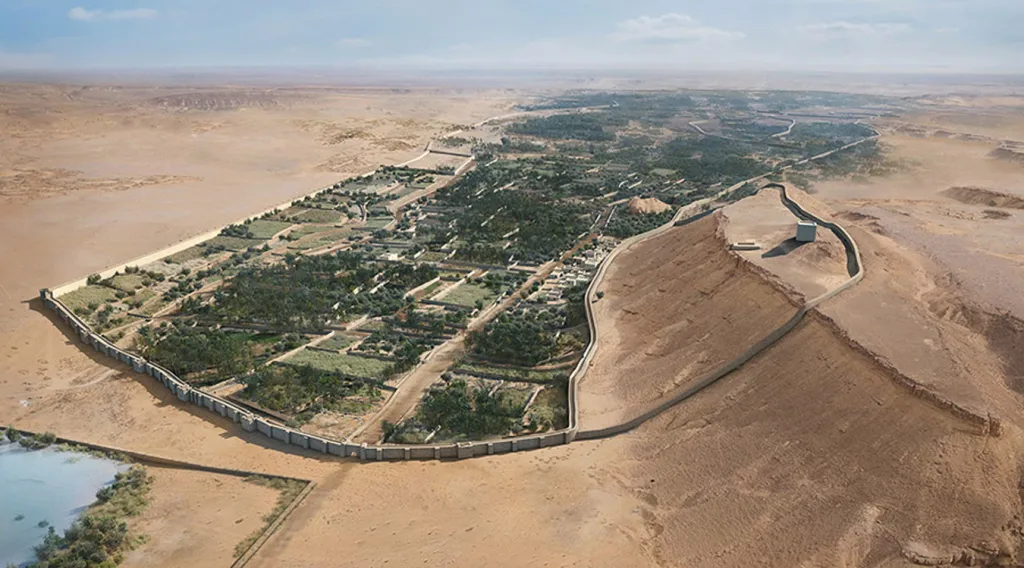
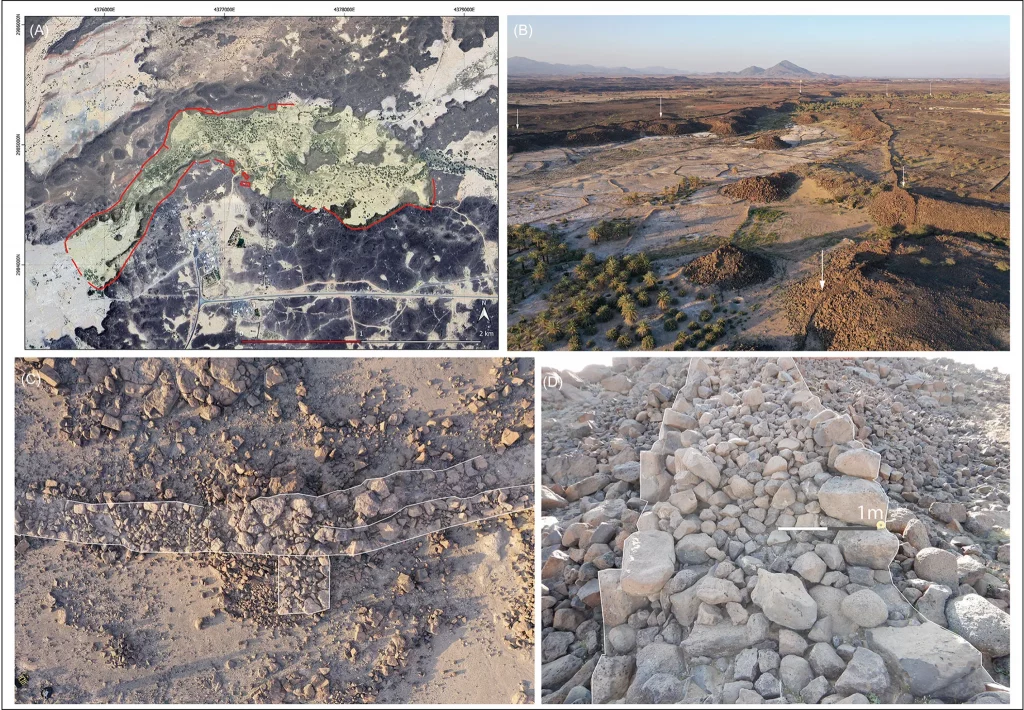
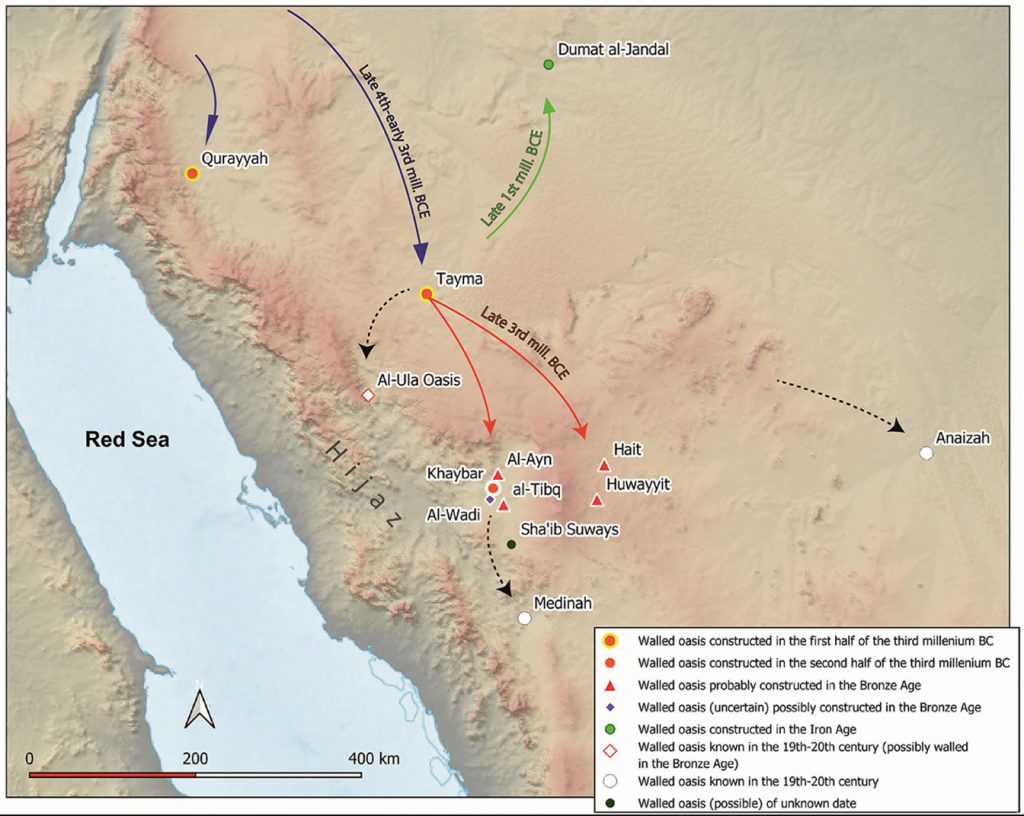
Recent archaeological discoveries across northwest Saudi Arabia have revealed just how established some of these communities were. A network of walled oases, including major settlements at Khaybar, Dumat al-Jandal and al-Ayn, points to permanent agricultural communities dating back around 4,000 years. Behind extensive mudbrick walls were organised settlements built around water, cultivation and long-term habitation.
Water was carefully channelled into these cultivated areas through underground qanats and gravity-fed irrigation systems, alongside the natural springs on which many settlements depended. At Al-Ahsa Oasis, more than 280 artesian springs once supported millions of date palms.
Date palms formed the upper canopy, shading fruit trees from the strongest sun. Beneath them, vegetables and smaller crops could grow closer to the ground. Planting at these different levels made good use of limited space and, beneath the palms, created a cooler place to cultivate.
Oases also became important points of connection. AlUla, inhabited since around 5,000 BCE, grew around its cultivated landscape and became an important stopping point for travellers and caravans. The palms offered water, food and respite from the journey. They also provided a place where people met, traded and exchanged knowledge before continuing on their way.
These early gardens were working landscapes, where water, planting, shelter and settlement depended upon one another. Beauty may not have been their starting point, but it emerged naturally from landscapes designed to make life possible in the desert.
In the Shade
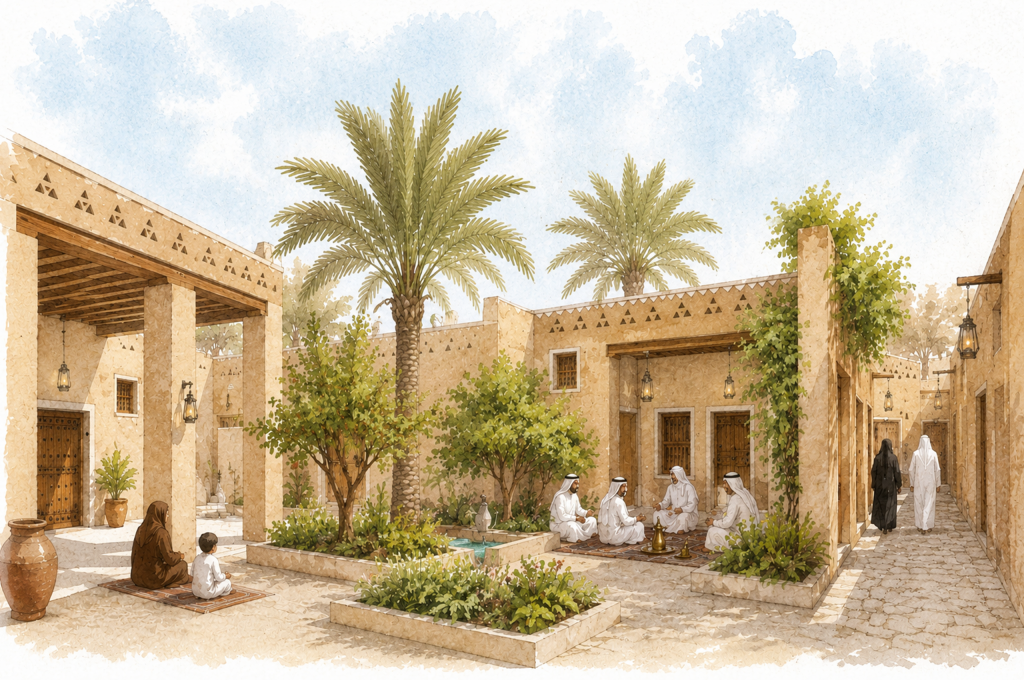
In the heat of the Saudi summer, shade changed how a space could be used. A courtyard, covered walkway or arcade offered somewhere to escape the direct sun, but also somewhere to sit, talk, eat and receive visitors. These sheltered spaces became a natural extension of daily life, occupying the territory between the enclosed home and the exposed landscape beyond.
Courtyards and garden pavilions offered cooler places to spend time outdoors, protected from the strongest sun while still allowing air to circulate. They also gave the household flexibility. Family life could remain private, while guests were welcomed into shaded areas where people could sit, talk and share food.
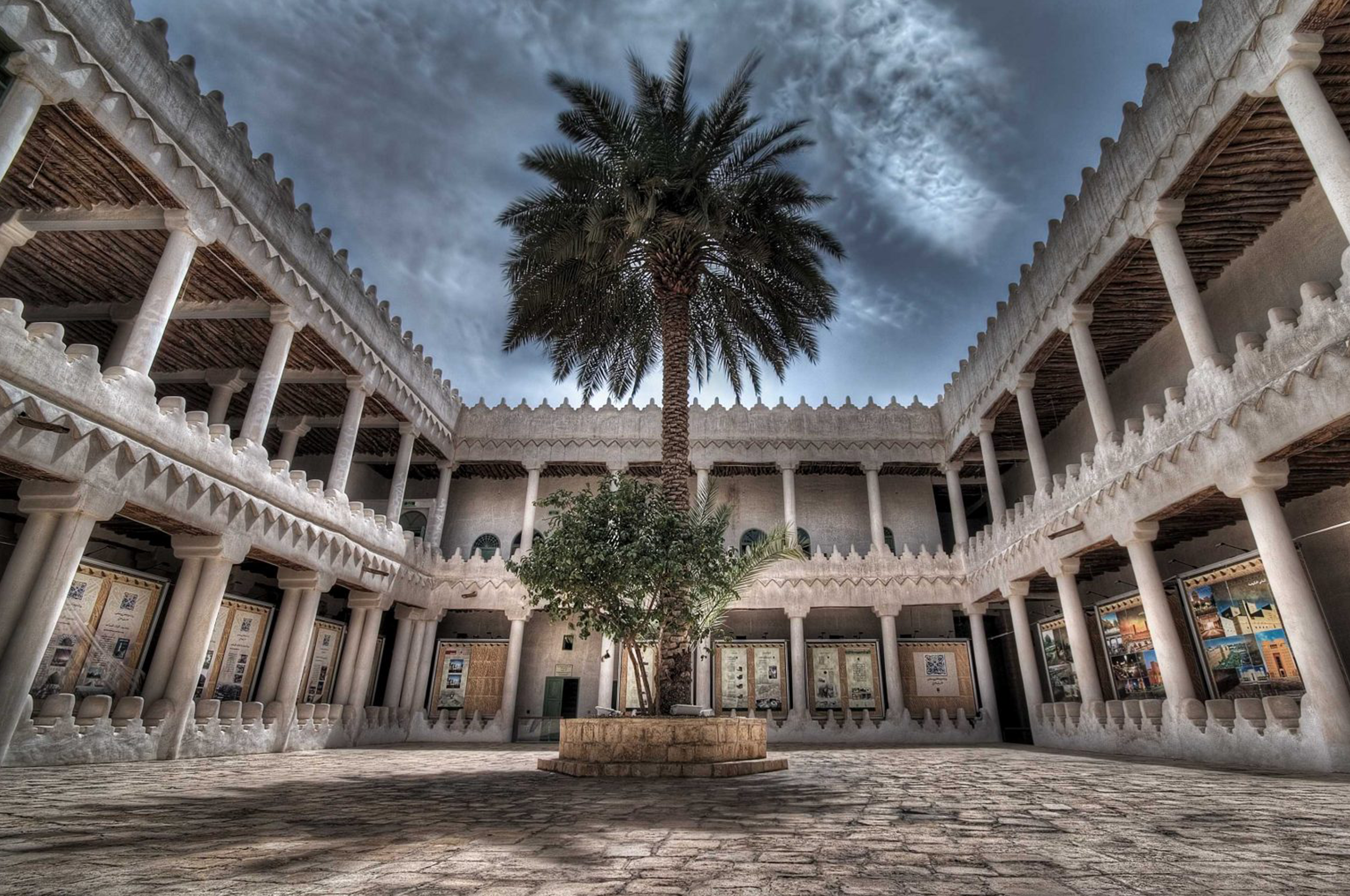
The same pattern could be found beyond domestic life. Mosque courtyards, arcades and colonnades provided places to gather before and after prayer, to rest, learn or spend time with others. Their shade allowed these spaces to remain active through parts of the day when an exposed courtyard or street would have been far less comfortable.
There was something immediate about the experience. Moving from the brightness of an open street into the shadow of a courtyard, beneath an arcade or under the canopy of a palm brought an instant change in temperature and atmosphere. Shade may have begun as a practical necessity, but it became part of how people experienced and shared the spaces around them.
Every Drop Mattered
In a landscape where water could never be taken for granted, there was little room for waste. Springs, wells and irrigation channels were essential infrastructure, carefully maintained and shared by the communities that depended upon them. The success of a garden, a farm or an entire settlement rested on how that water was managed.
Managing water was often a community effort. Wells had to be maintained, irrigation channels kept working and available supplies shared between farms and families. The idea of sharing water also has a place in Islamic teaching, where water, pasture and fire are described as resources held in common.
Scarcity inevitably shaped what was planted and where. Shade helped reduce exposure and evaporation, while irrigation directed water to where it could be put to productive use. Pools and channels could still have a place within gardens and courtyards, bringing movement, sound and coolness without requiring water to be used on a grand scale.
Nothing about this relationship with water was abstract. How much was available, where it came from and how carefully it was distributed had direct consequences for the people relying on it. In a country where water could determine whether a landscape survived, restraint was simply part of everyday life.
Behind the Walls of Najd
The courtyard sat at the centre of the traditional Najdi home, hidden from the street behind thick earthen walls. It gave families an outdoor space within the privacy of the house, with shade and shelter making it usable through more of the day.
The layout also allowed different parts of the household to function independently. Guests could be received without intruding on private family areas, while the courtyard provided an outdoor space that remained very much part of the home.
That sense of enclosure continued into the settlement itself. Narrow streets, or zuqaqs, wound between closely spaced buildings, their proportions limiting exposure to the sun and providing shade through parts of the day. Moving through these streets, between homes, mosques and gathering places, meant passing through a landscape where the buildings themselves helped provide shelter from the climate.
Beyond the walls and compact streets, cultivation took on a different scale. Farm gardens around Najdi settlements brought together date palms, fruit trees, vegetables and fodder crops. They supplied food and supported livelihoods, while the palms and other planting offered valuable shade for the people working among them.
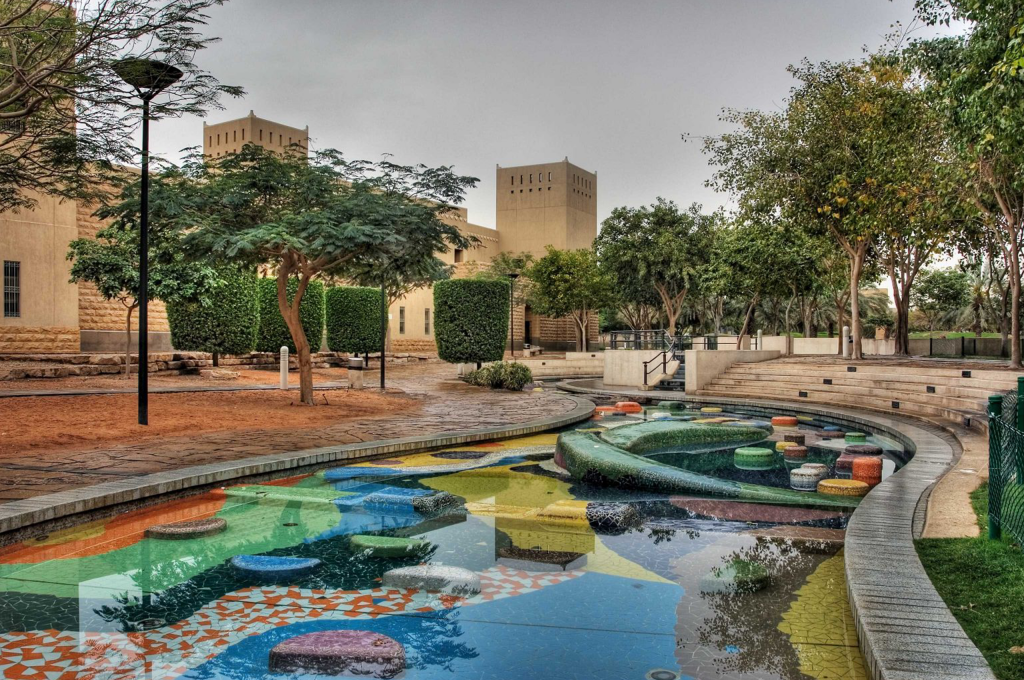
Riyadh’s Al Murabba offers a glimpse of how closely the city was once connected to this agricultural landscape. Before the King Abdulaziz Historical Center occupied the site, the area was known as Murabba Al-Sufyan, a seasonal agricultural floodplain on the outskirts of Riyadh. When King Abdulaziz built Al Murabba Palace in 1937, palm groves, cultivated plots and farm gardens remained part of its wider setting.
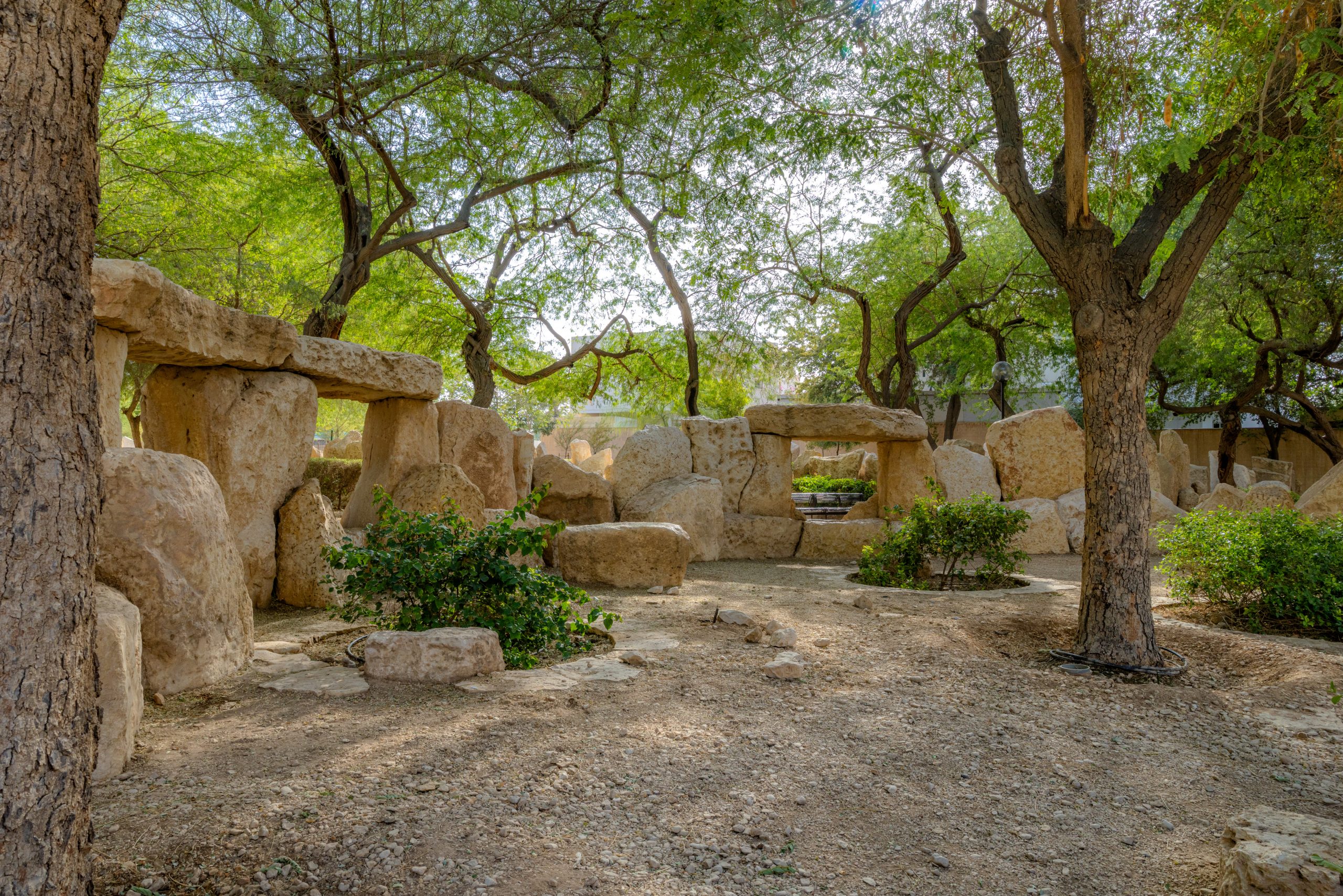
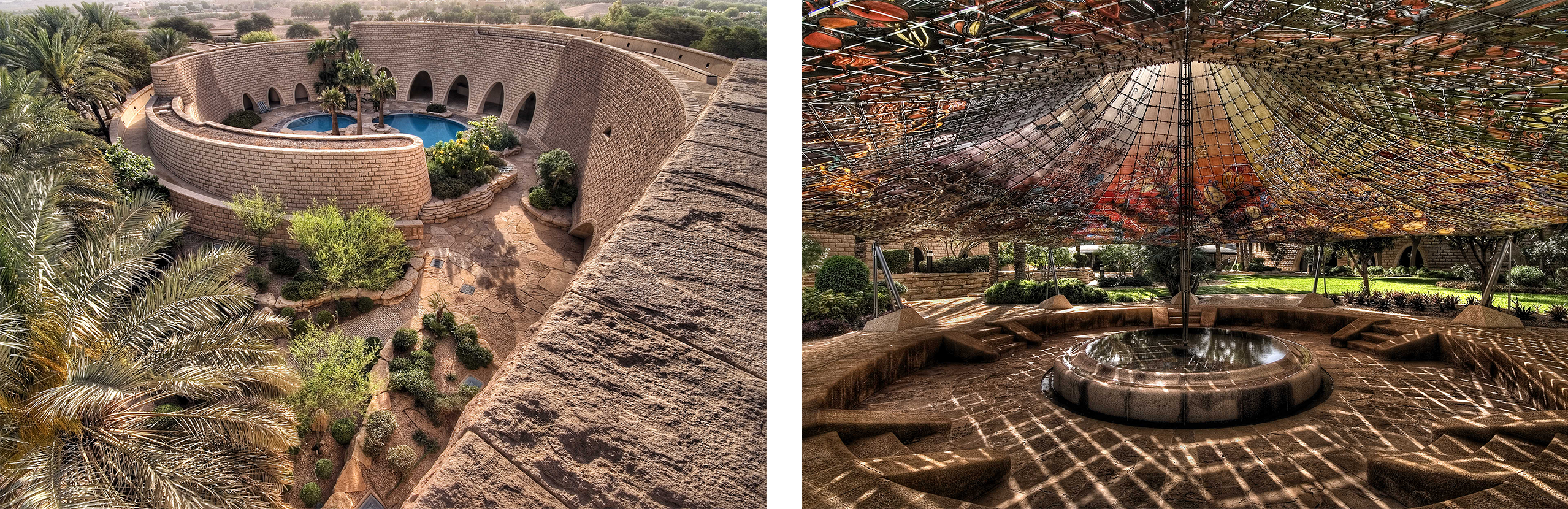
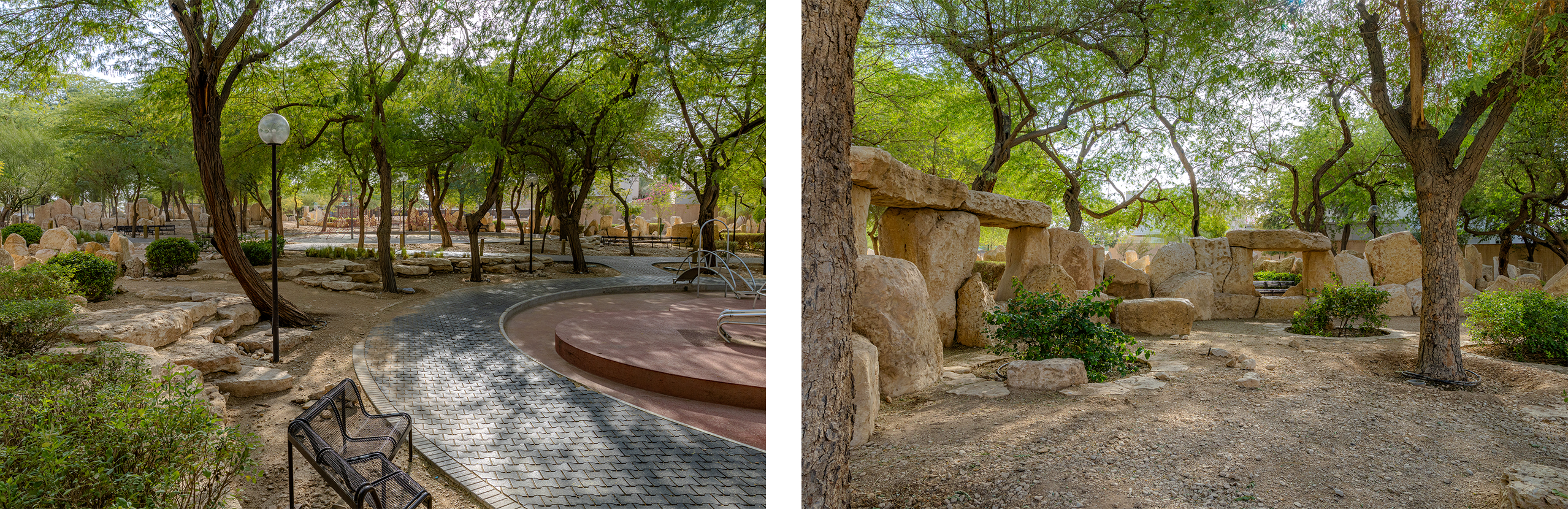
More than six decades later, the landscape took on a new role. When the area was redeveloped as the King Abdulaziz Historical Center in 1999, Bödeker Landscape Architects used palm planting, shaded public spaces and outdoor gathering areas to connect the historic palace with the National Museum.
Al Murabba had moved from the agricultural edge of Riyadh into the heart of a modern capital. Yet the presence of palms, shade and places to gather still carries something of the landscape that came before it.

A Different Garden in the Hijaz
West of Najd, the conditions changed. The Hijaz was shaped by the Red Sea, its mountain landscapes and the constant movement of people through Makkah and Madinah. Pilgrims, merchants and travellers arrived from across the Islamic world, bringing plants, horticultural knowledge and traditions that became part of the region over time.
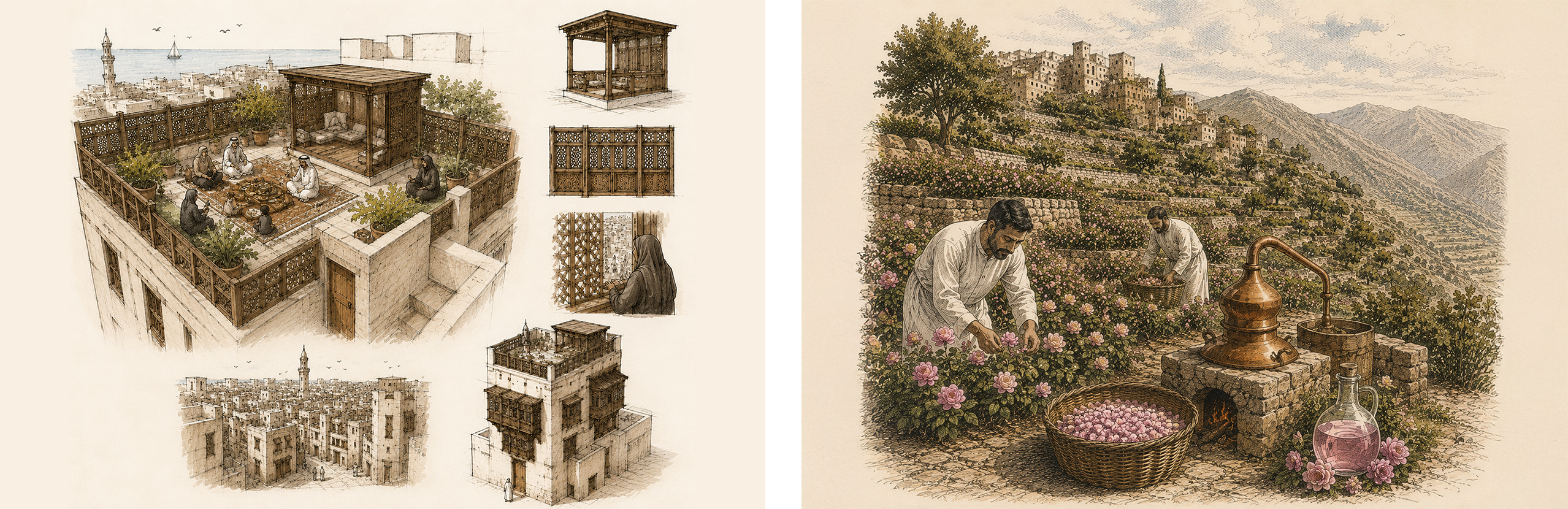
In historic Jeddah, the dense urban fabric left little room for gardens at ground level, so outdoor life moved upwards. Rooftop terraces gave families private space above the streets, where they could catch the breeze and escape some of the heat below. Screened by the distinctive rawasheen of Hijazi architecture and incorporating the kushk, these terraces became places to sit, gather and spend time outdoors.
Travel inland towards Taif and the landscape changes again. Higher elevation and cooler temperatures made the city a summer refuge from the heat of Makkah and Jeddah, while the surrounding mountain slopes supported terraced agriculture. Figs, pomegranates, grapes and peaches all grew here, alongside the crop that would become synonymous with Taif: the Damask rose.
For a few weeks each spring, the rose harvest transforms the farms. Picking begins early in the morning, when the flowers are fresh and their fragrance at its strongest. The petals are gathered and distilled into rose water and attar, the concentrated oil for which Taif has become renowned.
The fragrance travelled well beyond the mountains. Pilgrims returning home after Hajj carried Taif rose products with them, introducing them to communities across the Islamic world. Rose oil also became associated with the Grand Mosque in Makkah, where it has been used in the preparation and perfuming of the Kaaba.
There is considerable distance between a rooftop terrace in Jeddah and a rose farm in the mountains of Taif, yet both belong to the landscape story of the Hijaz. Each developed around what its particular setting offered — one finding outdoor space above a crowded city, the other taking advantage of the cooler air and fertile slopes of the highlands.
What the Past Can Teach the Future
Saudi Arabia is creating new landscapes on an extraordinary scale. Across the Kingdom, parks, public spaces and major urban developments are changing the relationship between cities and the outdoors. With that ambition come familiar questions: how to create shade, manage limited water, support planting in extreme heat and make outdoor spaces somewhere people genuinely want to spend time.
These may be challenges for a modern landscape industry, but they are hardly new to Saudi Arabia.
For generations, people responded to the same climate with the materials, knowledge and resources available to them. They cultivated beneath the canopy of date palms, shared and managed water, shaped buildings and streets around shade, took gardens onto the rooftops of Jeddah and farmed the cooler slopes around Taif. None of these landscapes was created from a single idea of what a Saudi garden should be. Each developed in response to its own place.
Garden traditions elsewhere in the world also reveal something about the societies and environments that shaped them. French formal gardens expressed power, order, and control through geometry and scale. English landscape gardens celebrated picturesque scenery and an idealised vision of nature, while Japanese gardens often emphasised contemplation, seasonality, and the careful framing of natural beauty.
The Saudi garden tells a different story. Scarcity, heat, and the search for shade shaped landscapes centred on hospitality, stewardship, privacy, and environmental intelligence. Beauty was not separated from function, but embedded within it.
There is no suggestion that these landscapes should simply be recreated. Saudi Arabia today is vastly different, as are its cities, technologies and expectations. But looking back reveals something useful. Many of the ideas now central to climate-responsive landscape design — conserving water, creating shade, working with local conditions and putting people at the centre of outdoor space — have been part of the region’s landscape story for centuries.
Perhaps that is where the past has most to offer the future. Not a garden to copy, but a way of thinking about one.
The Saudi garden became distinctive because it understood where it belonged.
Footnote
This article draws on research and historical material from UNESCO, the Saudi Heritage Commission and other published architectural and cultural sources.
You are currently viewing a placeholder content from Facebook. To access the actual content, click the button below. Please note that doing so will share data with third-party providers.
More Information