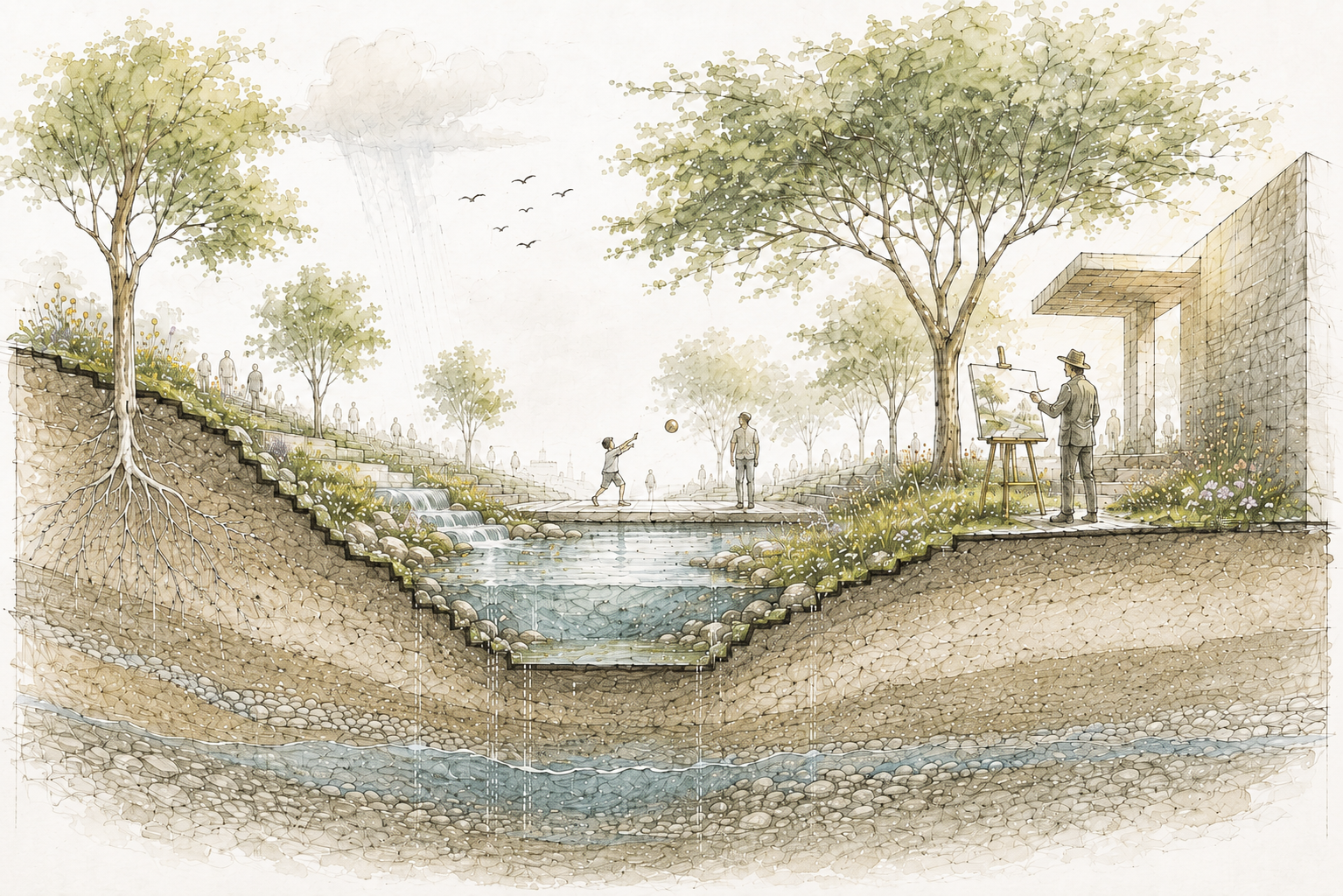
Conceptual AI-generated image showing the intersection of science and art in landscape
People often think of science and art as two separate worlds.
Science asks what is true. Art asks what is meaningful.
Landscape architecture asks both questions at the same time.
It is a profession that relies on science to understand how landscapes function, but also on creativity to shape how people experience them. Every landscape must respond to real conditions such as climate, soil, water, and ecology. At the same time, it must create places that people enjoy, remember, and connect with.
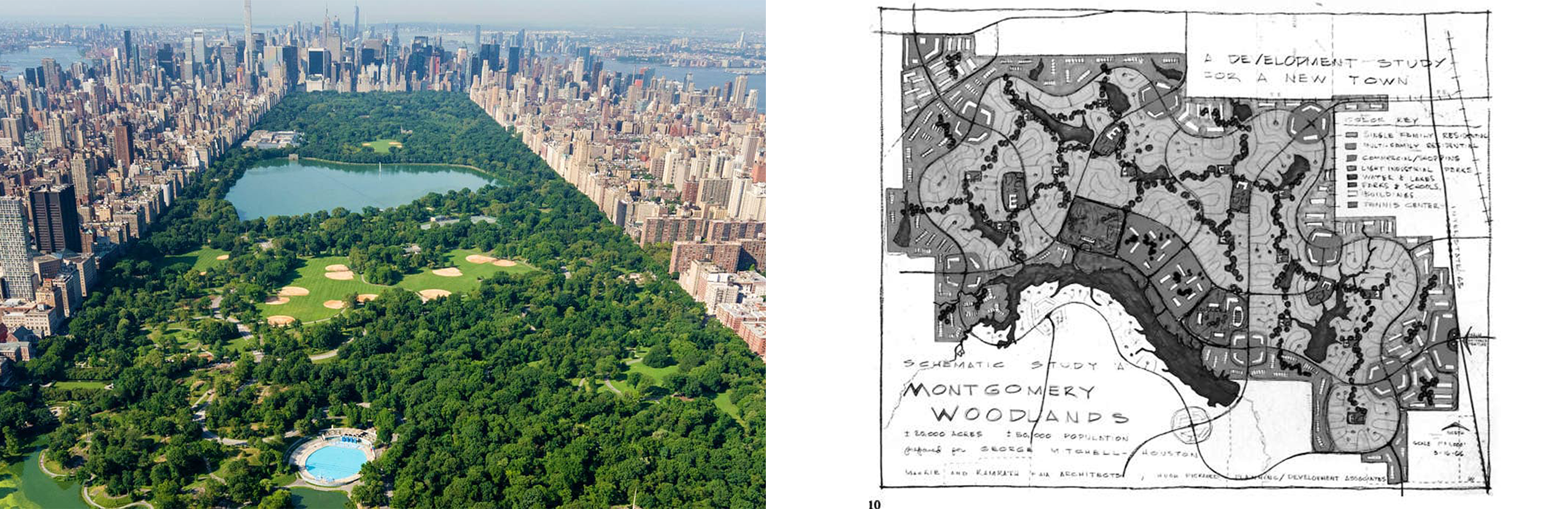
In the nineteenth century, Frederick Law Olmsted showed how landscapes could improve public health, social wellbeing, and the quality of urban life. Nearly a century later, ecological planning pioneer Ian McHarg argued that design should begin with an understanding of the natural processes that shape the land.
While their approaches differed, both recognised something important: landscapes influence both the environment and the people who live within it.
Landscape architecture exists in the space between science and art.
Fig 1: Aerial view of Central Park. Vaux and Olmsted's Greensward Plan was 'natural-looking, in an English Picturesque, rather than French style. Image credit: Kiely, Alexandra. "The Creation of Central Park, NY: Vaux & Olmsted’s Greensward Plan" TheCollector.com, May 1, 2022. Gig 2: Schematic study for a new town, Montgomery Woodlands. Following McHarg's ecological approach, the plan mapped drainage, floodplains, and forest cover first, then fit roads and neighborhoods around them. Image credit: Ian McHarg et al., Master Plan of The Woodlands (1973), via landscapetheory1.wordpress.com.
Understanding the Landscape Through Science
Before a landscape can be designed, it must first be understood.
Every site has a life before the designer arrives. Water moves across it, soils develop over time, plants adapt to climate, and ecological relationships form between species. These processes are often invisible, yet they influence every design decision.
Understanding these conditions is not preparation for design. It is design.
The movement of water affects erosion and drainage. Climate determines which plants can survive. Soil influences plant health. Ecological relationships affect biodiversity and habitat creation.
A healthy landscape is not created by chance. It depends on understanding how natural systems work and designing with them rather than against them.
Science provides that understanding.
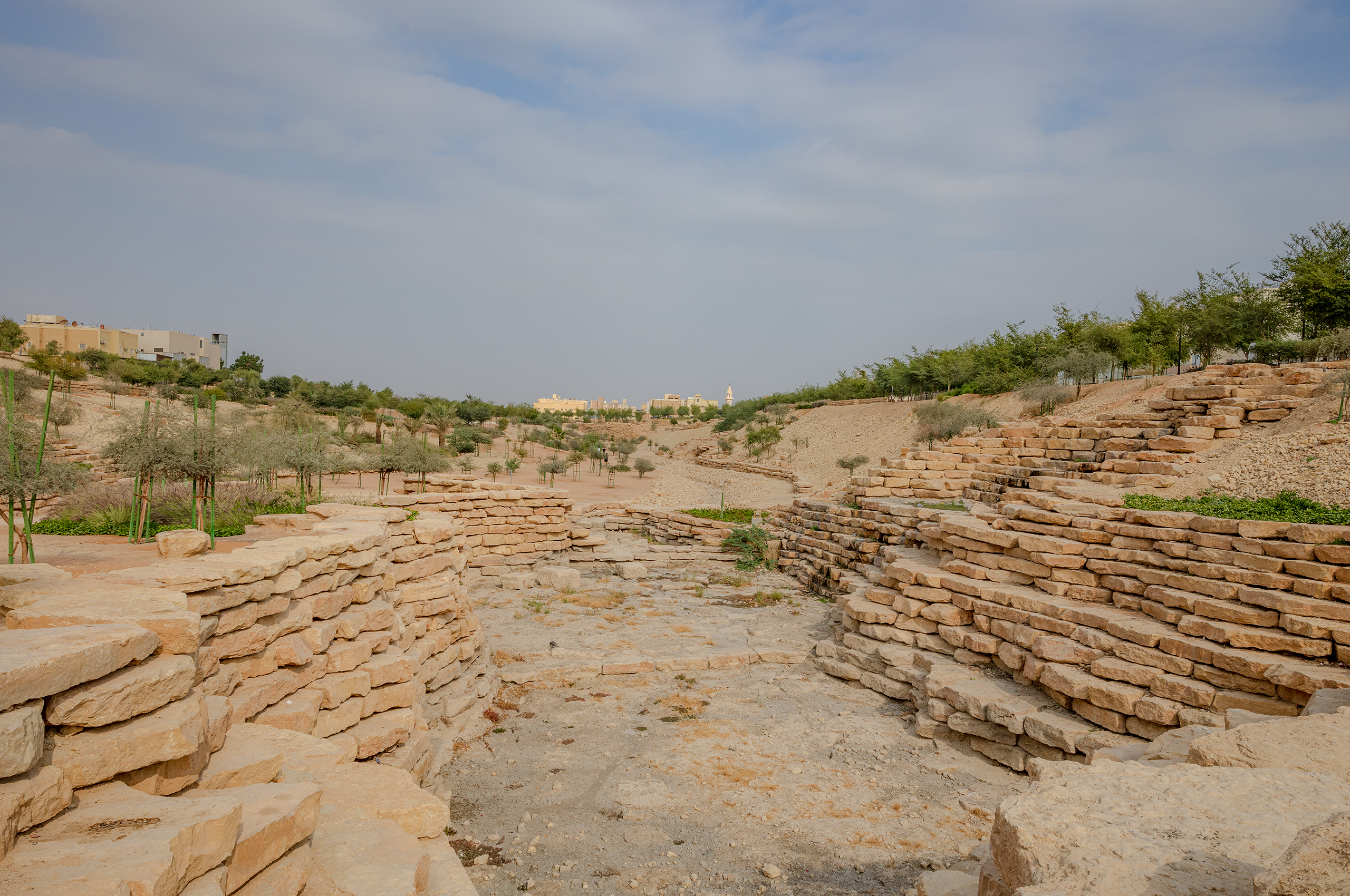
Wadi Ghudwana: Stone terraces, natural drainage patterns and climate-adapted planting demonstrate how landscape design can work with the site’s natural systems
Experiencing the Landscape Through Art
Function alone, however, is not enough.
A landscape can perform well from an ecological perspective and still fail to attract people. It can provide shade, support biodiversity, and manage water successfully, yet still feel uncomfortable, forgettable, or disconnected from its surroundings.
This is where the artistic side of landscape architecture becomes important.
The way a person enters a space, the views they encounter, the contrast between light and shadow, the rhythm of planting, and the feeling created by different materials all shape how a place is experienced.
These decisions cannot be measured in the same way as rainfall or soil conditions.
They rely on creativity, observation, and an understanding of how people experience places.
Art gives landscapes meaning.
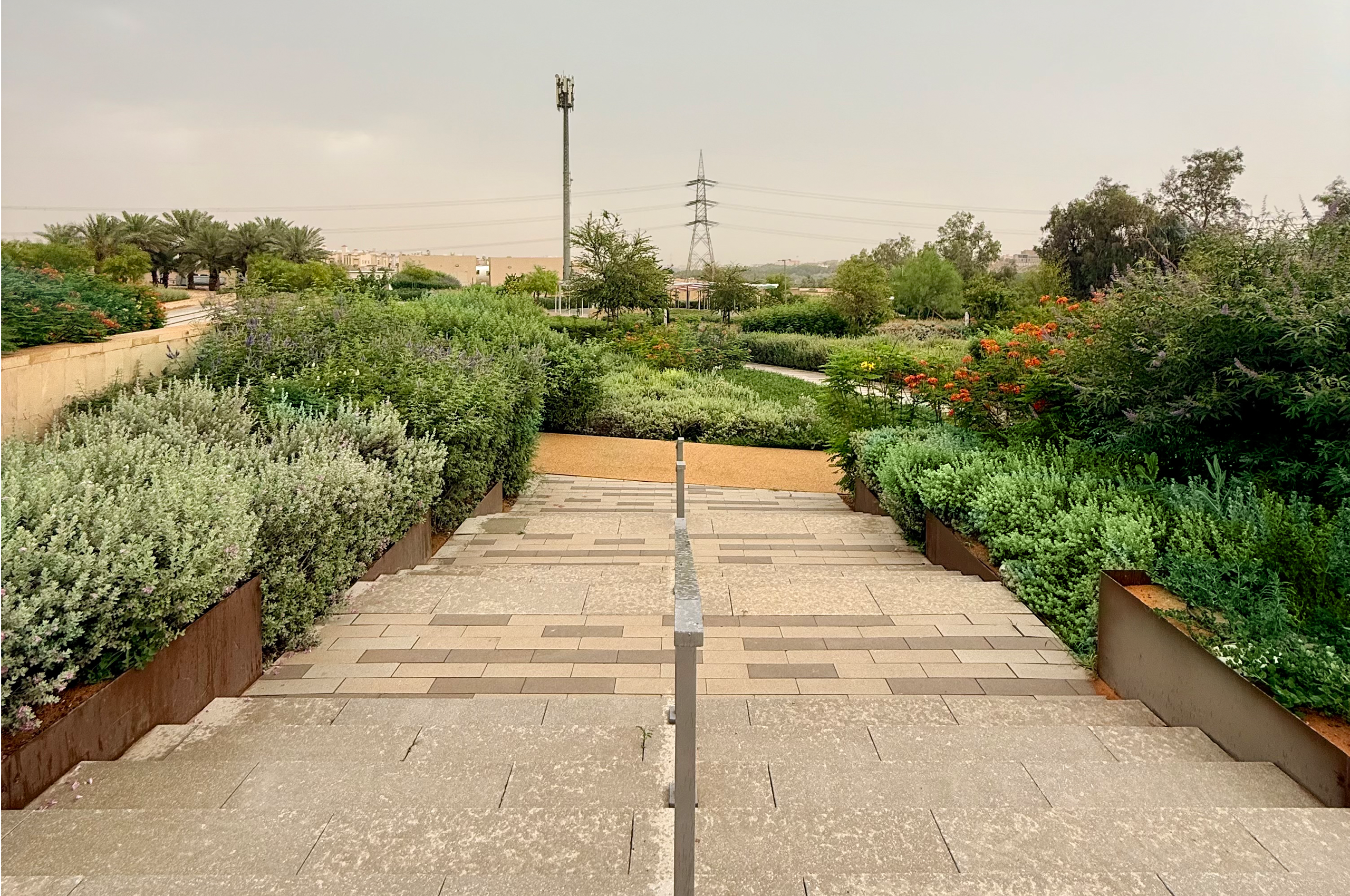
King Fahad Cultural Center: Layered planting, framed views, and the rhythm of steps and materials shape the journey through the landscape.
When the Same Decision Does Two Things
The most successful landscapes are often those where science and art work together.
A tree may be selected because it can tolerate drought, provide shade, support biodiversity, and survive local soil conditions. These are scientific reasons.
Yet the same tree may also frame a view, define an entrance, create seasonal interest, or strengthen the identity of a place.
The decision serves two purposes at once.
This is especially visible in Saudi Arabia, where landscapes must respond to a demanding climate while also creating places where people want to spend time. A successful landscape is not only one that survives. It is one that is valued and used.
Science determines how a landscape performs.
Art influences how it feels.
Neither can achieve its full potential without the other.
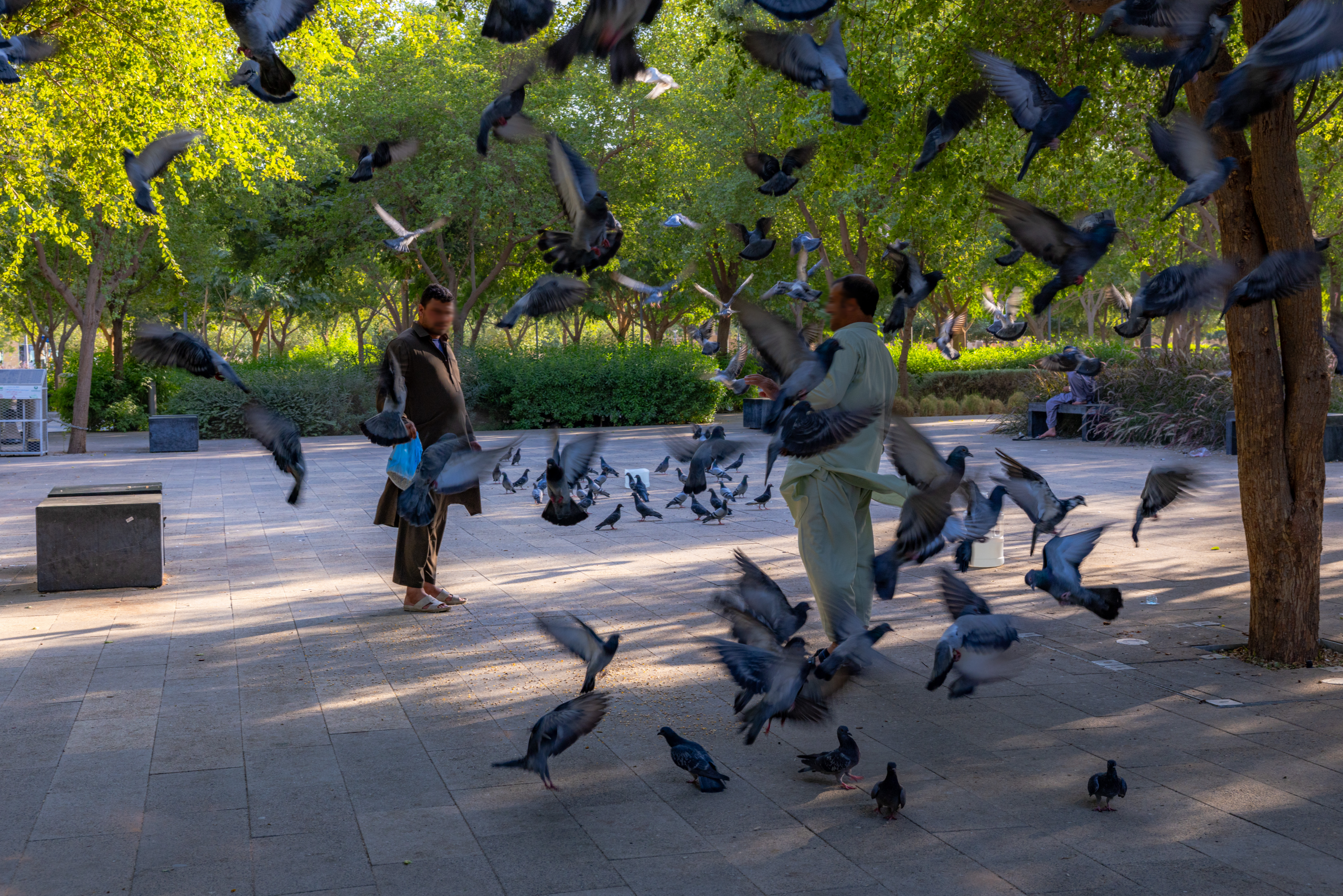
Justice Palace Parking: A shaded tree canopy supports urban biodiversity while creating a comfortable social space, showing how one landscape decision can serve ecological and human needs at once.
A Discipline That Brings Things Together
Many professions specialise in one area of knowledge. Landscape architecture brings several together.
It combines ecology, engineering, culture, climate, aesthetics, and human experience. This becomes increasingly important as cities face challenges such as climate change, biodiversity loss, urbanisation, and questions of identity.
Addressing these challenges requires more than technical solutions. It also requires creating places that people care about.
Perhaps this is what makes landscape architecture unique.
It is neither purely scientific nor purely artistic.
It exists in the space between the two, transforming scientific understanding into places that people can experience.
You are currently viewing a placeholder content from Facebook. To access the actual content, click the button below. Please note that doing so will share data with third-party providers.