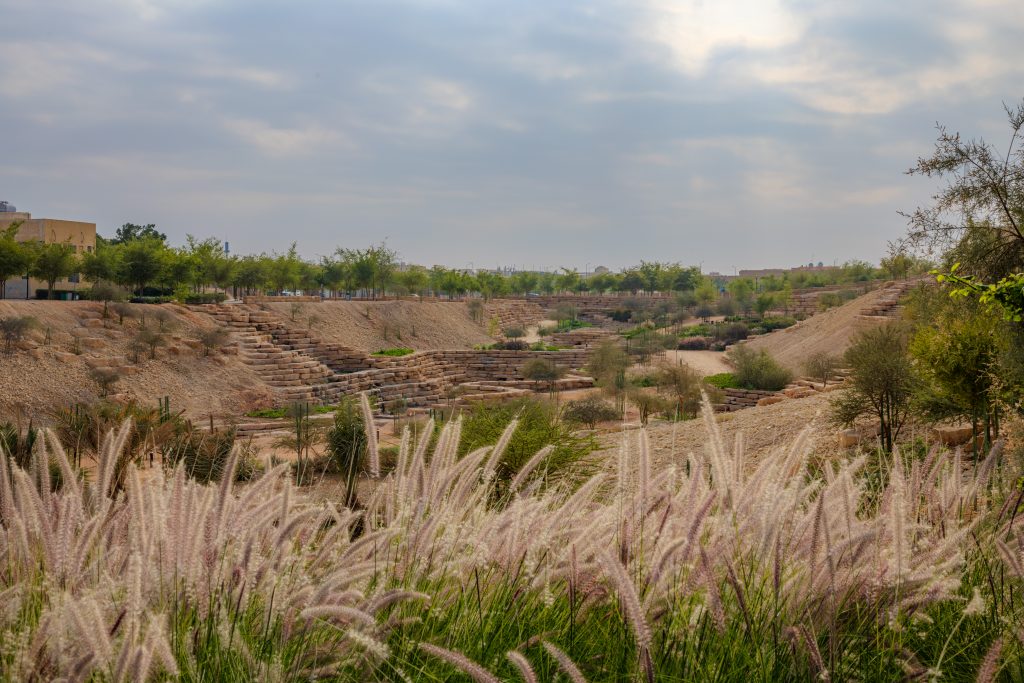
Wadis are among the most overlooked opportunities in the urban environment. At first glance, they appear to be leftover spaces between developments, too irregular to build on and too unpredictable to manage. In reality, they are something far more compelling — active geological systems, continuously shaped and reshaped by water, sediment, and gravity. When properly understood, they offer something far more valuable — the ecological and hydrological backbone of desert cities and valuable spaces for public realm.
Across Saudi Arabia, from Wadi Ghudwana, Wadi Hanifah, and Wadi Sulai in Riyadh to Wadi Al Aqeeq in Madinah, these landscapes are defined by the same underlying forces. They are not static voids but evolving systems, formed through episodic flood events that carve, transport, and deposit material over time. Each wadi has its own scale and character, but the logic behind them is consistent. Understanding that logic is the starting point for any meaningful design intervention.
The Forces That Shape
In wadis, erosion is best understood as a chain of connected processes — such as rainfall, runoff, sediment transport, channel cutting, and slope retreat – rather than a single isolated event. Each process reinforces the others over long periods of time through repeated flood events. These forces carve escarpments, deepen channels, and create the distinctive landforms seen across the region which form part of the natural heritage.
At bends, faster-moving water concentrates along the outer edge, cutting into the slope and forming what is known as a cut bank — exposed, often unstable ground subject to ongoing erosion. On the inner edge, where flow decelerates, sediment settles to create a slip-off slope: gentler, more stable ground that accumulates over time. This continuous exchange between erosion and deposition, driven by the mechanics of helical flow, shapes the structure of the wadi itself.
In locations such as Wadi Sulai, these processes remain clearly visible, offering a natural record of how the landscape evolves. This is not abstract theory — it is a working system that continues to operate with every rainfall event. The more deeply these dynamics are understood, the more meaningful and responsive design within these environments will become.
Erosion, Deposition and Soil Formation
Erosion alone tells only part of the story. Its counterpart — deposition — is what allows these landscapes to support life.
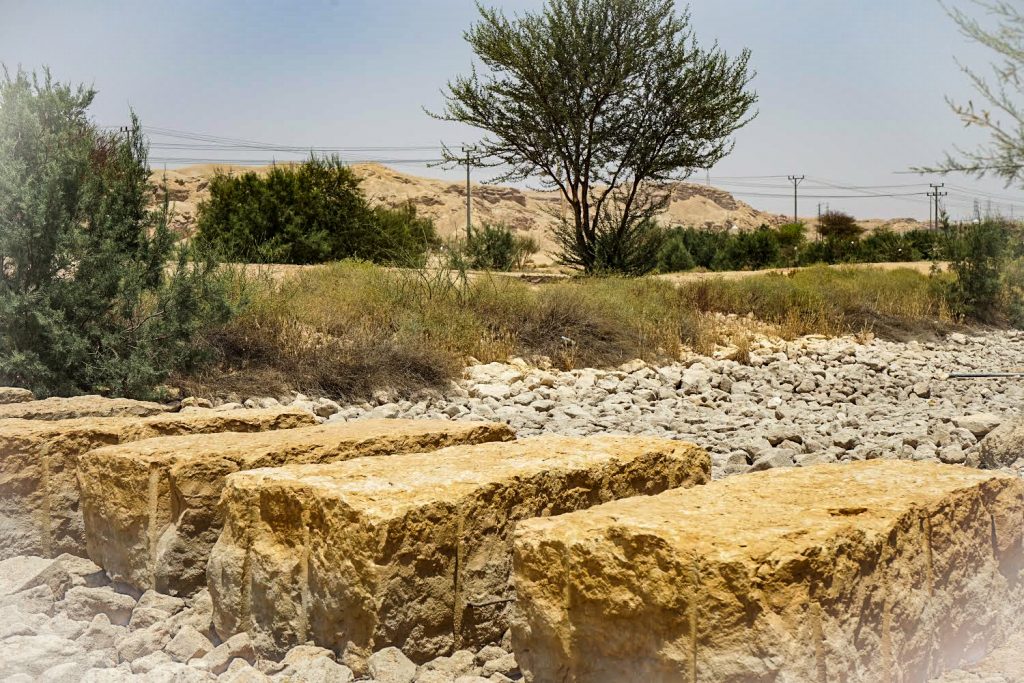
As water slows, it drops the sediment it carries. Over time, this accumulation builds layers of alluvial soil that retain moisture, support vegetation, and create the most fertile zones within arid environments. Historically, Saudi Arabia’s agricultural heartlands developed along wadis — productive land shaped by repeated cycles of flood, sediment movement, and deposition.
Erosion and deposition are two sides of the same process. One sculpts the land, the other builds it — together determining not just how a landscape looks, but what it can sustain.
For designers, this relationship is important. Left unmanaged, erosion strips land faster than it can recover — removing not just soil, but the capacity for life itself. Guided correctly, however, the same forces can be harnessed to stabilise landforms and build fertile ground, laying the foundation for long-term ecological performance.
When Natural Systems Meet the City
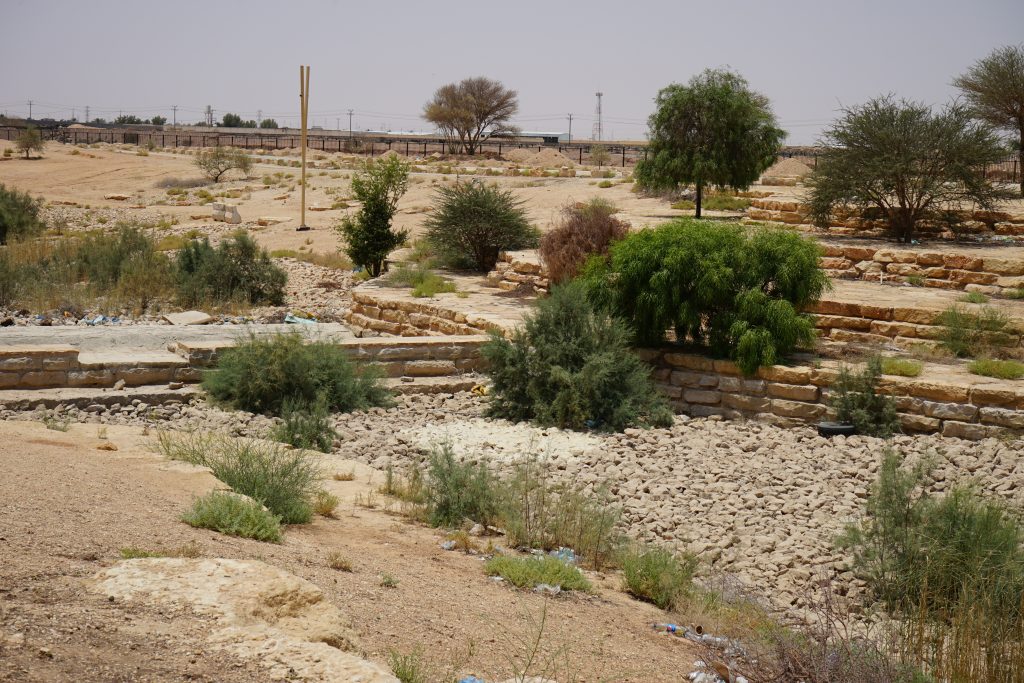
Where natural systems meet urban development, a more layered and complex story begins to unfold. The energy behind these natural processes is what makes wadis such dynamic and compelling environments to design within. In Wadi Ghudwana, for example, prior to restoration, erosion threatened nearby homes following heavy rain events.
However, erosion is not inherently a problem — what matters is the context in which it takes place. Water is not the enemy — resistance is. The moment design stops fighting the natural behavior of wadis and starts working with it, the same forces that once caused problems become the foundation of something far more resilient. Wadis cannot be engineered out of existence. They can only be understood, carefully guided, and accommodated.
Designing with Water in Mind
Landscape architecture in wadis is not about eliminating natural processes; it is about working with them. Design becomes a mediator between water and the built environment, shaping how flow moves through the landscape rather than attempting to stop it. In practice, this means aligning with the system’s natural behaviour.
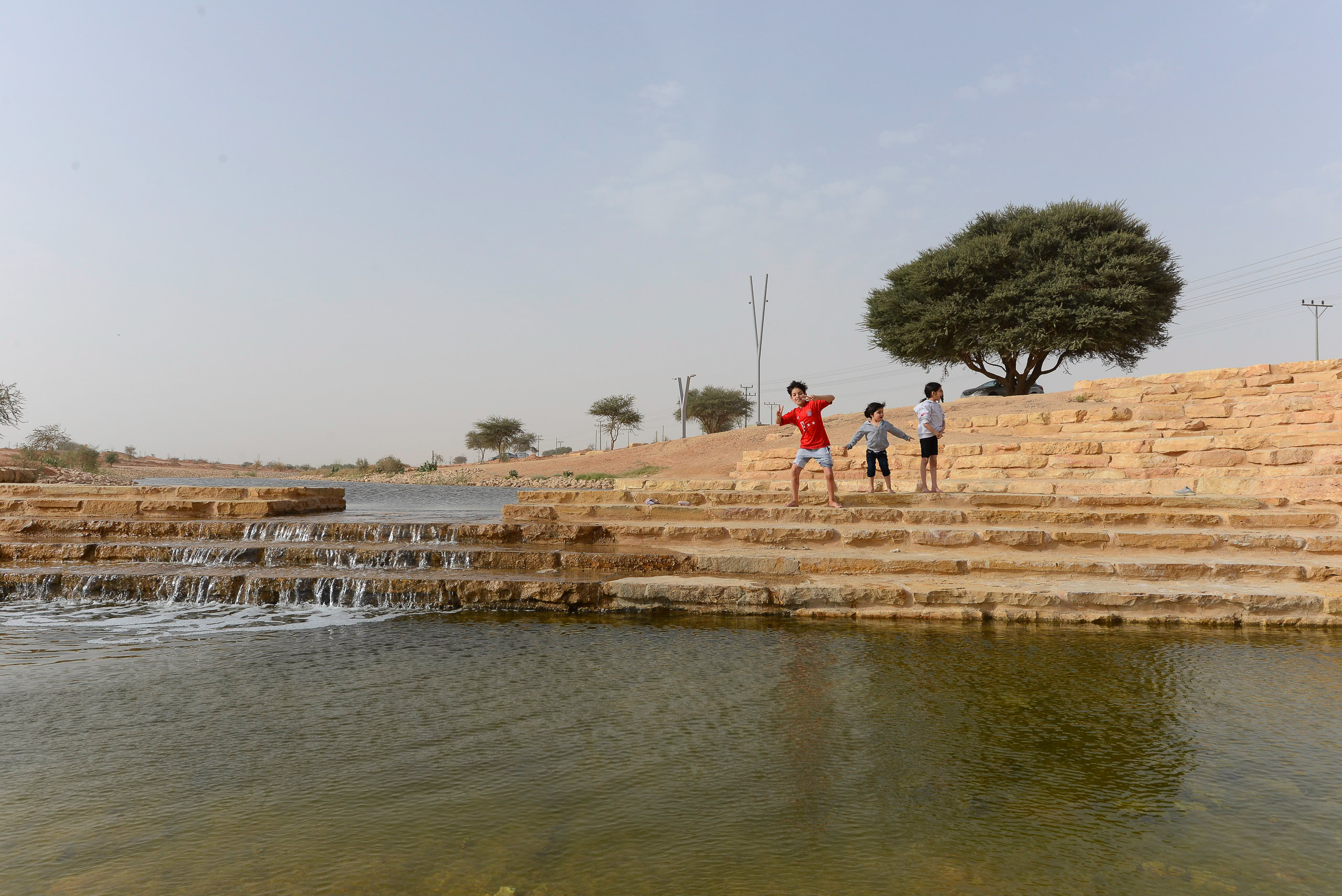
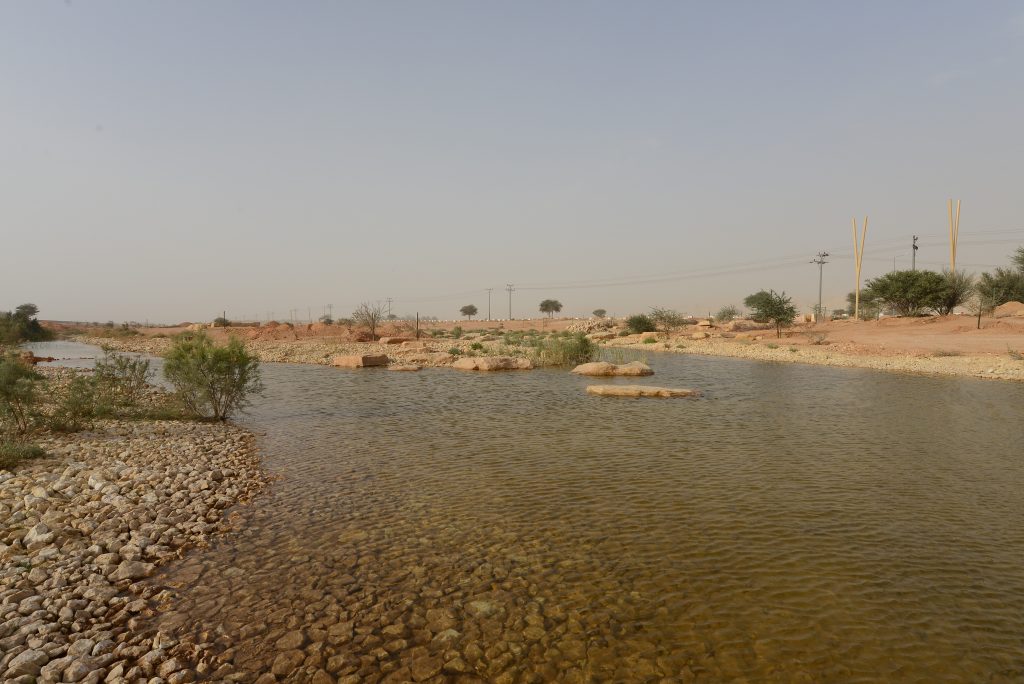
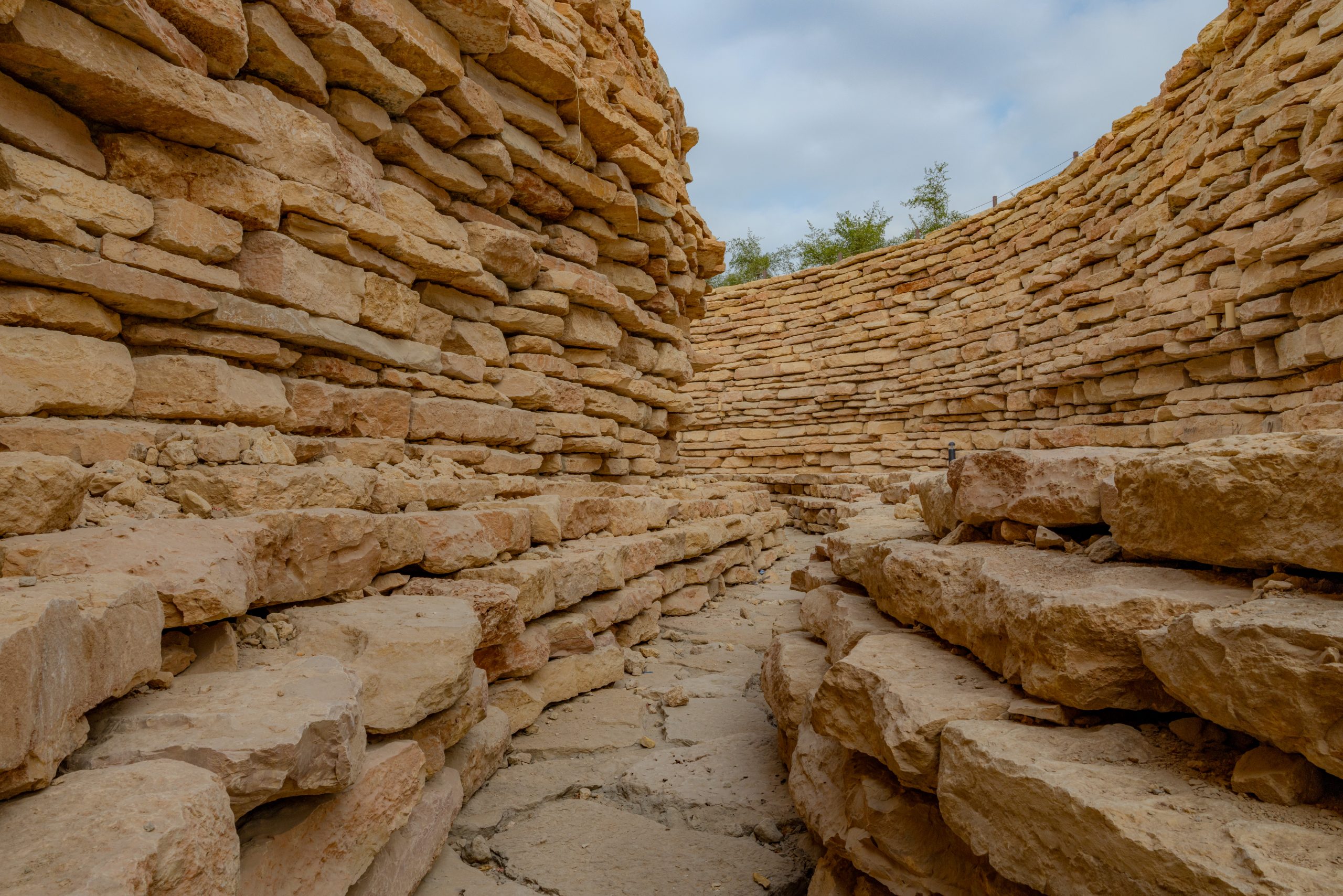
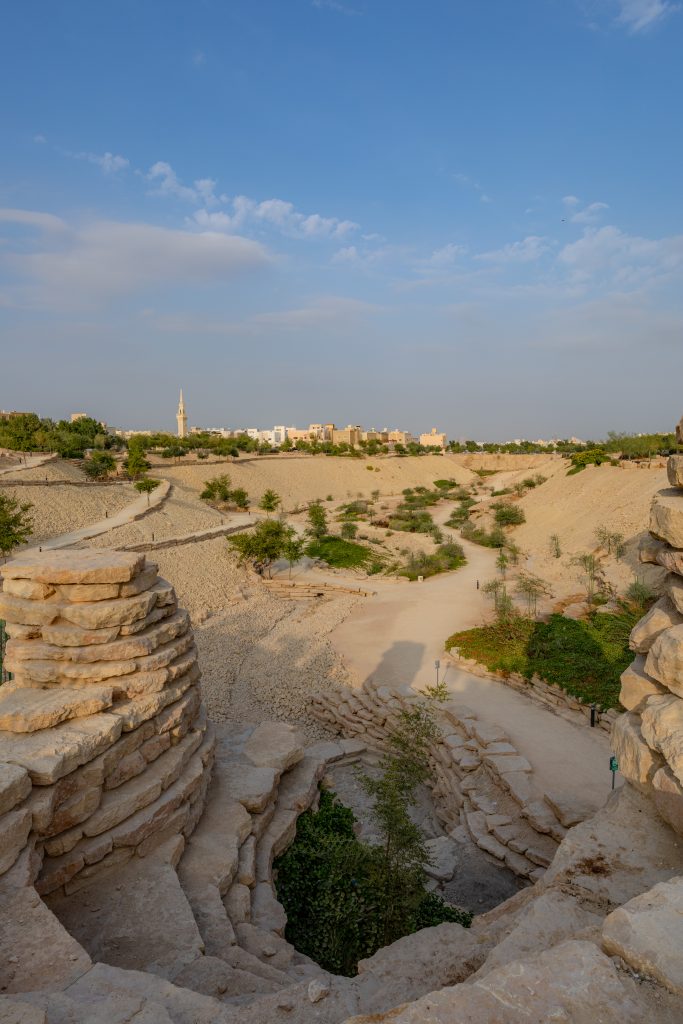
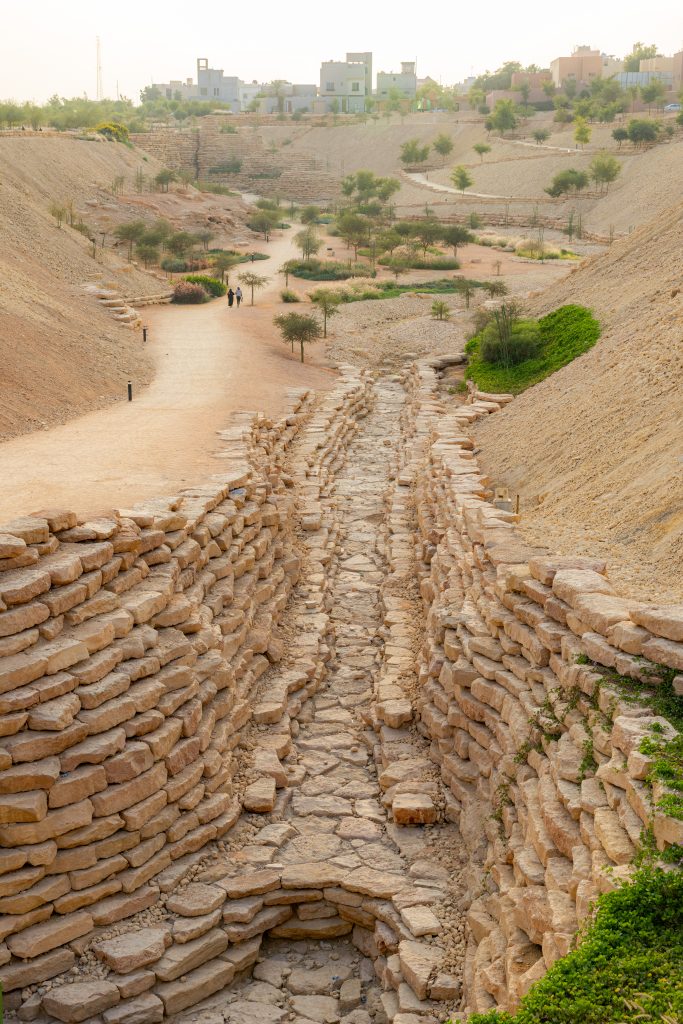
At Wadi Ghudwana, this approach is clearly evident. Instead of diverting water away from the site, the design guides it through the landscape — allowing it to slow, spread, and infiltrate. The result is not an engineered channel, but a functioning system that reads as natural while operating safely within an urban context.
This approach is not site-specific. The same principles apply across Riyadh’s wider wadi network. In Wadi Hanifah, they operate at a much larger scale across an extended floodplain. In Wadi Sulai, the dynamics of cut banks and slip-off slopes offer a clear demonstration of how flow actively shapes landform. In Wadi Al Aqeeq in Madinah, the same interplay of erosion, deposition, and seasonal flow confirms that these principles are not particular to one location, but inherent to the nature of wadis across the region.
Wild Systems in the City
The significance of wadi restoration lies not only in ecological repair, but in what it reveals about the relationship between cities and natural systems.
Wadis are active, dynamic systems that can be integrated into the urban fabric, contributing to water management, biodiversity, and public life. Their value lies not in their appearance, but in their performance — how they manage water, support vegetation, and create usable space within the city.
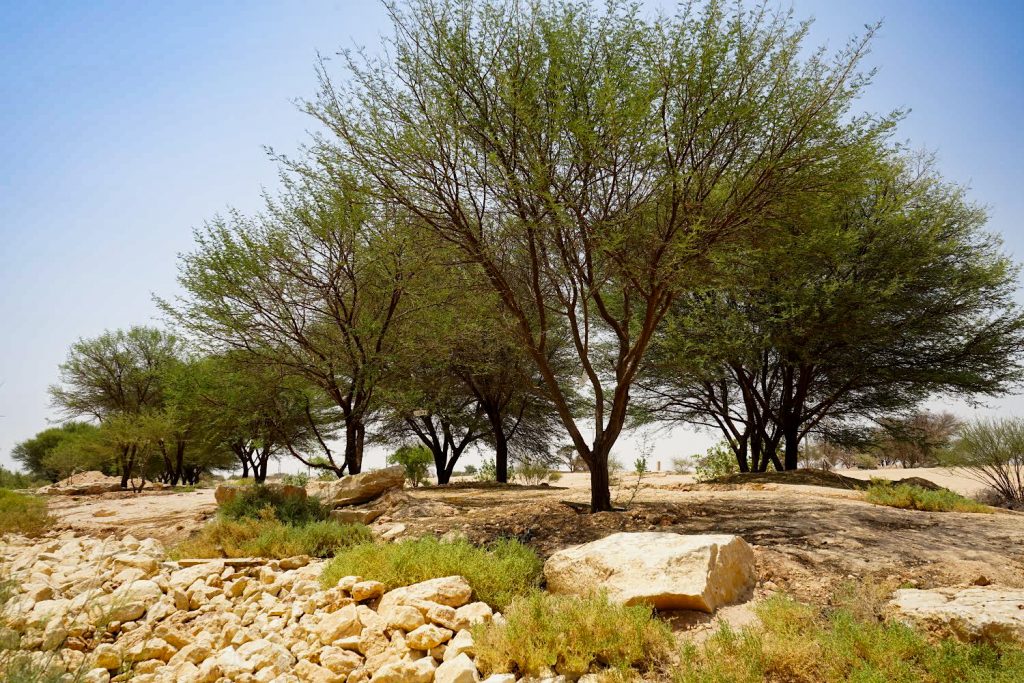
The transformation of Wadi Ghudwana — from degraded land into an eight-kilometre green corridor — illustrates this clearly. It now supports vegetation, attracts wildlife, and provides accessible space for residents, demonstrating how a functioning landscape system can deliver both ecological and social value simultaneously.
As cities across the region continue to expand, the importance of these systems becomes more apparent. They offer a way to manage water naturally, reduce environmental risk, and introduce ecological performance into dense urban environments. At the same time, they create spaces for recreation, environmental education, and direct experience of natural systems — drawing urban life back into contact with the processes that shape the land.
The difficulty lies in striking the balance between allowing natural processes to happen and making wadis accessible and safe at the same time.

Design based on Understanding
Wadis are a reminder that the most powerful forces shaping a landscape cannot be designed away — only understood and worked with. Water, sediment, and gravity have been forming these systems for thousands of years, and they will continue to do so regardless of what is built around them.
The question for designers is not how to stop these forces, but how to read them clearly enough to make better decisions. Where does erosion threaten, and where does it serve? Where should water be slowed, and where should it move freely? Where is soil being lost, and where can it be built? These are not engineering questions alone — they are design questions, and they begin with understanding the landscape on its own terms.
Saudi Arabia’s wadis are not obstacles to city-making — they are among its most valuable assets. Active systems capable of managing water, reducing flood risks by slowing flow speeds down and creating retention areas, building soil, supporting biodiversity, and anchoring public life. But that value is only unlocked when design is grounded in how these landscapes actually work. Natural forces do not negotiate; they reward those who understand them. In wadi design, that understanding isn’t just a starting point; it’s the foundation everything else is built on.
Blog article is published in: Landscape Middle East – April
You are currently viewing a placeholder content from Facebook. To access the actual content, click the button below. Please note that doing so will share data with third-party providers.
More Information